
Institute of Social and Cultural Anthropology
Fieldwork in the US and British Virgin Islands
31 March 2026
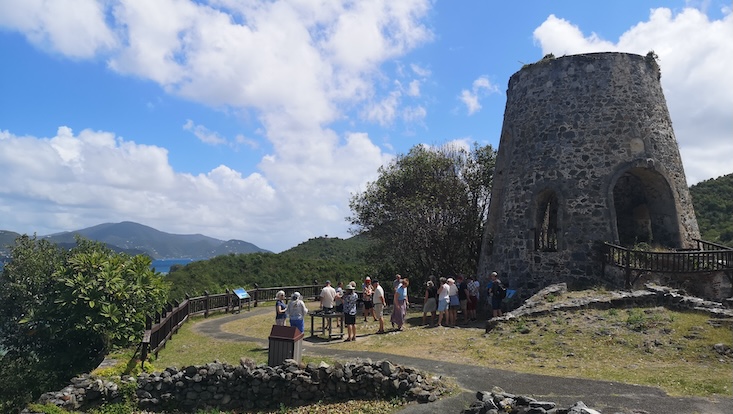
Photo: Bille Sachers
From 1 to 18 March 2026, our team conducted preliminary fieldwork in the US and British Virgin Islands. Located in the Lesser Antilles, the archipelago formed one corner of the transatlantic triangular trade. Our aim was to survey the material traces of slavery and to understand how this legacy is engaged with today. In total, we visited more than 40 sites.
The team (Jonas Bens, Christian Mader, Bille Sachers and Arjunraj) visited forts, former plantations and other sites of colonial infrastructure. Until 1917, the US Virgin Islands were the Danish West Indies, a central hub in the trade in enslaved people, who were forced to labour on the islands' sugar plantations. The neighbouring British Virgin Islands have been under British rule since the seventeenth century and remain a British Overseas Territory today. The close proximity of two colonial regimes makes it possible to compare different forms of remembering slavery within a small area.
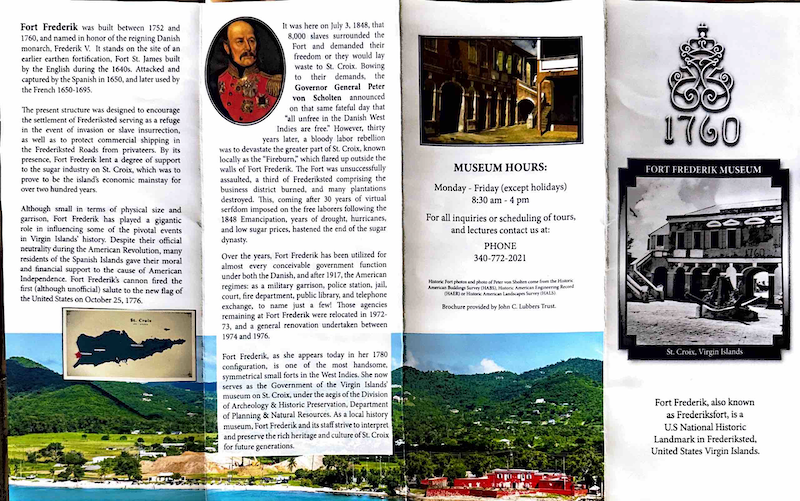
A guide for visitors to Fort Frederik, built by the Danes in 1760 in Frederiksted, St. Croix, recounts the protests that took place here in 1848, which led to the emancipation of enslaved people in the Danish West Indies, as well as the Fireburn protests of 1878 against poor working conditions after emancipation.
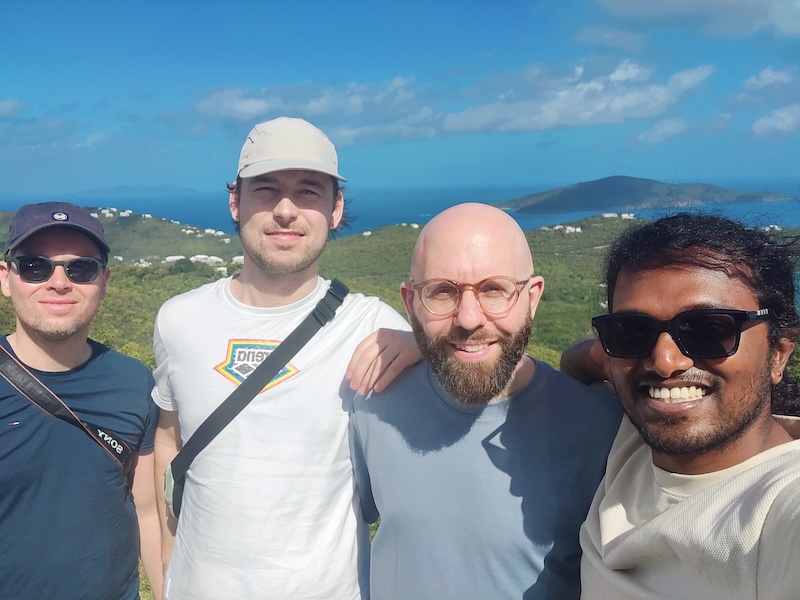
The research team: Christian Mader, Bille Sachers, Jonas Bens, arjunraj