
Collaborative Storytelling
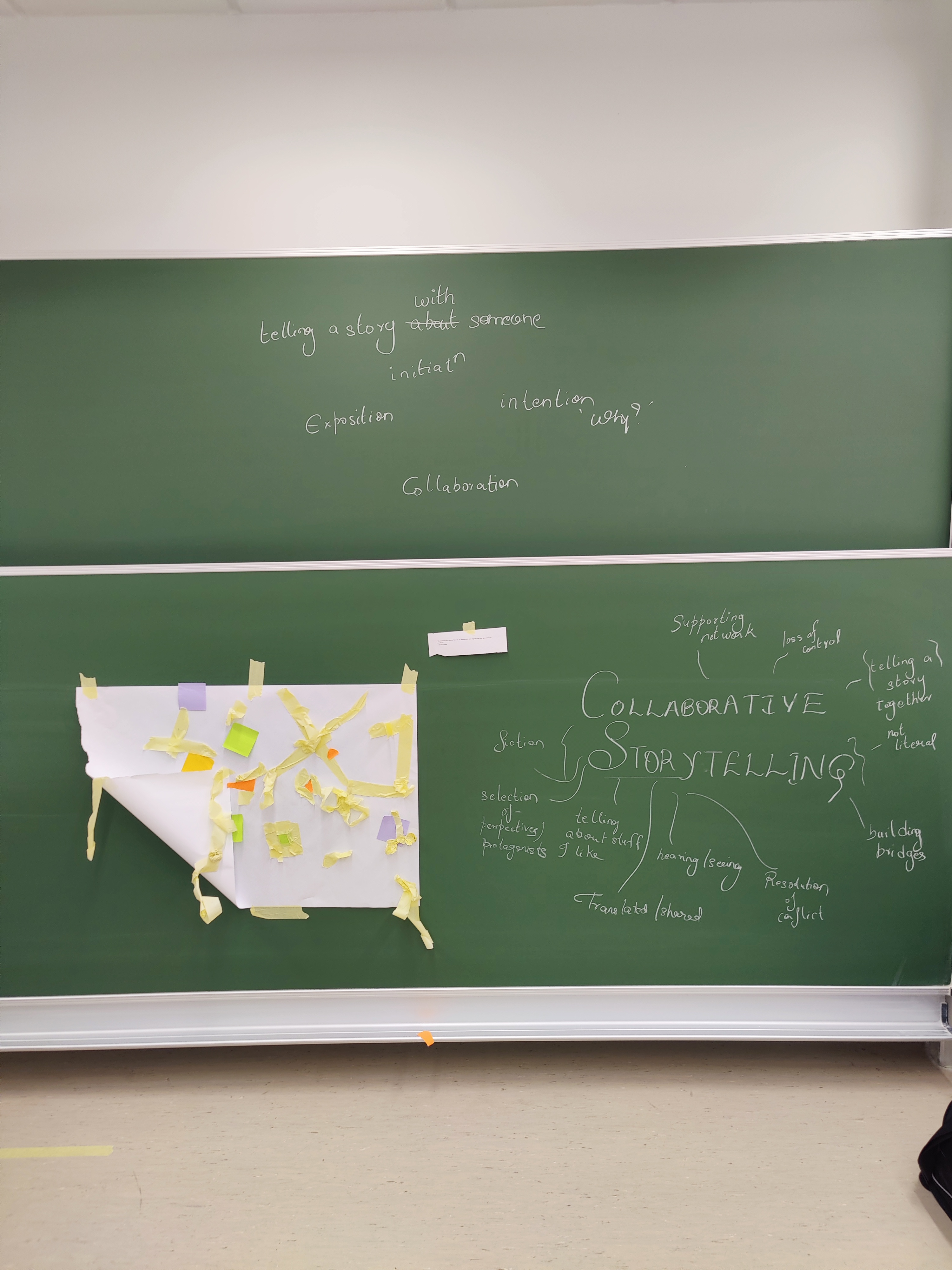
This project examines storytelling as a relational practice through which people make sense of themselves, their kin, their communities, and the institutions that claim to represent them. It asks who gets to tell whose stories, under what conditions, and how people narrate their lives within social and political regimes that may silence, distort, or challenge their narratives.
The project studies three sites of narrative-making where storytelling is either explicitly collaborative, expected to be collaborative, or inherently relational. First, it examines identity-driven storytelling among artivists - artists and activists - in Berlin, Germany, who use storytelling in their pursuit of belonging, collective liberation, and resistance against structural injustice. Second, it studies a collaborative museum project at the Ethnologisches Museum in Berlin, where cultural belongings of Tanzanian Maasai communities are stored, classified, and represented. This part of the project looks at the politics of representation and the tensions between institutional storytelling and Indigenous storytelling around these artefacts. Third, it turns to autoethnographic storytelling through personal stories of the researcher’s self and family in Mumbai, India. This situates the researcher and their embodied narratives within the project itself, particularly through the experience of navigating familial silences, family secrets, and the ethical questions of how such stories are told, revealed, and to whom.
Through fieldwork in India, Germany, and Tanzania, the project critically explores the following questions: How is storytelling used to respond to the human need to be seen, heard, and understood by others? How do storytellers navigate social inequalities, and systemic regimes of power in their attempt to tell their own stories? Can storytelling bring people across differences into a shared space of encounter and become a method for collaborative endeavours? And is storytelling always an inherently collaborative act?
